Turn a large study design into a manageable week
Studying for VCE can feel like a full-time job that never ends. You open a VCAA study design, see dozens of dot points and wonder how they could possibly fit around sport, friends and everything else. The answer is to turn the study design into small, focused revision goals that you can work through across the week.
You do not need to spend six hours each night staring at textbooks. Long sessions can backfire when your attention is split. A practical plan uses focused blocks, regular review and realistic time for rest.
Study with focus, not just for longer
More hours at a desk do not automatically mean more learning. A long session spent checking notifications can be less useful than a shorter block where you give one topic your full attention.
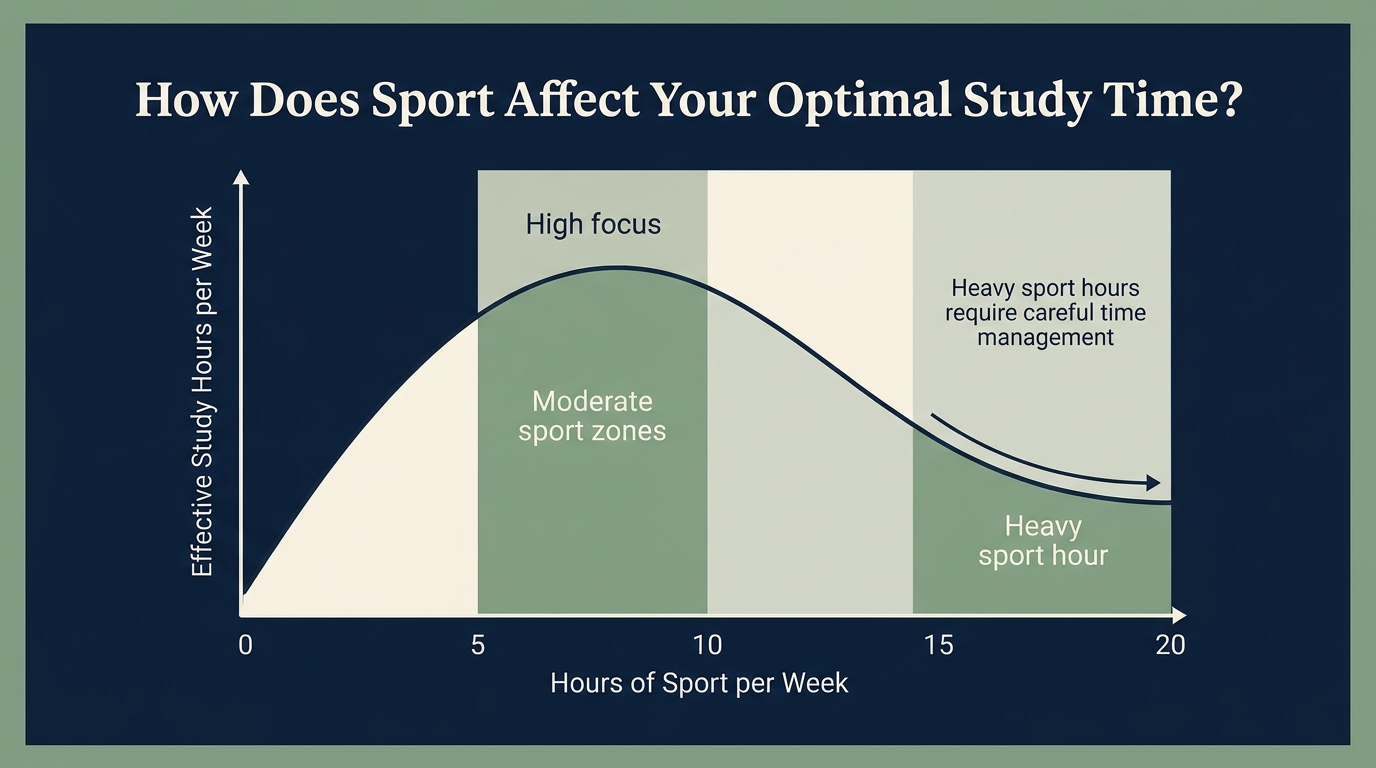
Put your phone out of reach, choose one clear goal and work on it without switching tasks. Regular physical activity and breaks can also support wellbeing and help make a study routine easier to sustain.
Sport and study need to fit around each other. The graph below is an illustrative idea, not measured research data or a prediction for every student: the right balance depends on your schedule, energy, sleep and commitments.
Try a 20-minute revision block
A simple rule of thumb is to set aside about 20 minutes for each period of a subject you attended that day. For example, two periods of one subject could mean a 40-minute review block. Adjust the time to suit your workload, energy and other commitments; it is a starting point, not a rule you must follow.
For each block, choose one study-design dot point connected to what you learned that day. Write a short summary or answer a few practice questions, check your work against reliable solutions, then move on. Revisiting new material soon after class can make later revision more manageable.
- Choose one key-knowledge or key-skill dot point from the lesson.
- Summarise it from memory or answer a few focused practice questions.
- Check your response against class notes, a teacher’s guidance or a reliable solution.
- Record anything unclear so you can ask about it or revisit it later.
For another approach to reviewing material over time, read our guide to spaced revision.
- Why Spaced Revision Is the Smartest Way to Study
See how short review sessions at spaced intervals can support long-term recall.
Use the study design as your checklist
The current VCE study design helps you identify the knowledge and skills assessed in each subject. Use its key-knowledge and key-skill points to guide your revision, and check with your teacher when you are unsure how a point applies to your course.
1. Print or save the relevant pages
Keep the Unit 3 and Unit 4 sections for each subject somewhere easy to review. Mark the areas you have covered and note questions you still need to resolve.
2. Map dot points to the weeks ahead
Look at the time before your next SAC or exam and break larger areas into smaller weekly goals. Spread the work across the weeks instead of trying to learn every dot point in the final few days.
3. Combine recall with practice
Reading highlighted notes can feel familiar without showing what you can retrieve independently. Try answering a question, drawing a diagram or explaining a process from memory, then use feedback to find the next point to practise.
Protect your free time and social life
Put sport, family commitments, meals and downtime into your week before filling every open space with study. Treating rest as part of the plan helps keep your routine realistic and gives each study block a clear place.
An example after-school routine
3:30 pm: Get home, have a snack and unwind.
4:30 pm: Complete focused revision blocks for the subjects studied that day.
6:00 pm: Go to training or fit in another activity.
7:30 pm: Have dinner and spend time with family or friends.
9:30 pm: Start winding down for sleep.
Treat this as an example to adapt, not a timetable everyone needs to copy. Your school day, travel, sport and energy levels may call for a different arrangement.
Download the weekly revision planner
Use the printable planner to map subjects, revision tasks and upcoming assessments across the week. It also includes space to set priorities and reflect on what worked, so you can adjust your plan next week.
- Download the printable weekly revision planner (PDF)
A one-page planner for weekly goals, daily revision tasks, assessments and reflection.
Build consistency without giving up real life
You do not have to sacrifice your life to make progress in VCE. Turn study-design dot points into small revision goals, keep sessions focused and leave room for sport, friends and rest. A plan you can return to consistently is more useful than an intense schedule that is impossible to maintain.