Introduction
You spent all year treating your classmates like rivals. You guarded your practice essays like trade secrets. You hid your summary sheets inside your locker so nobody could catch a glimpse. It makes sense on the surface. School SACs put you in direct competition with the person sitting at the next desk. But once school assessed coursework ends, that competitive mindset actually hurts your final ATAR.
When exam season hits, holding onto resources harms your results. Sharing notes, practice exams, and feedback with your peers helps everyone score higher. Let us talk about how cohort moderation works in Victoria and why helping your classmates elevates your own score.
How SAC Moderation Works in Victoria
Many students assume VCE is a zero sum game from start to finish. That is a misconception. During the school term, your SAC marks determine your rank within your school cohort. If you rank first in English, you hold the top spot. If you rank tenth, you hold the tenth spot.
Once SACs finish, the Victorian Curriculum and Assessment Authority steps in with external exams. VCAA uses external exam scores to moderate internal SAC marks across every school in the state.
Here is the key takeaway: VCAA scales your cohort's internal SAC marks based on how well your entire group performs on the official end of year exam. If your top ranking student scores 95 on the exam, the top internal SAC mark gets adjusted to match that score. If your whole group performs well on the final exam, the whole group sees their SAC scores shift upward.
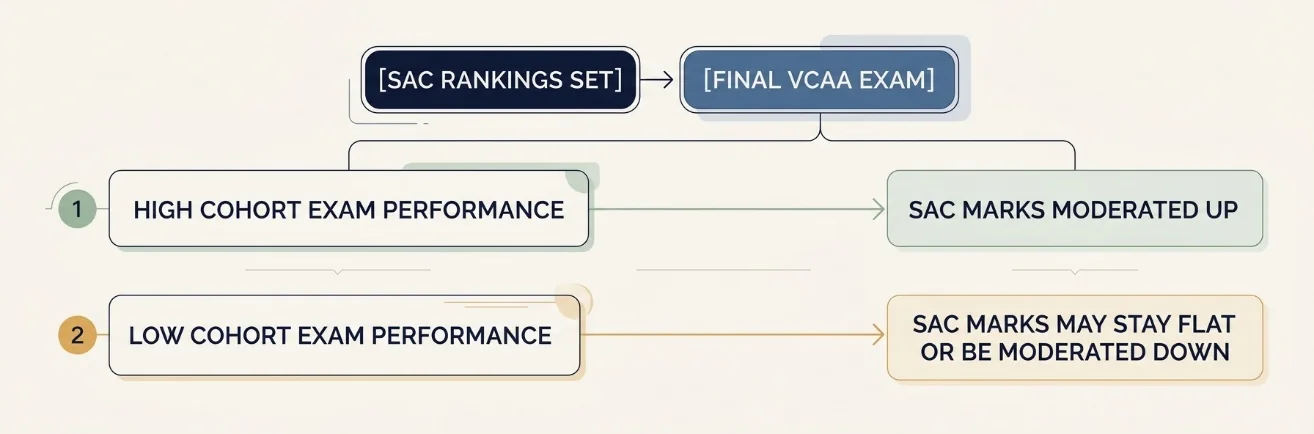
If you help the student ranked below you improve their exam performance, you do not lose your rank. Your rank stays locked in from your internal coursework. Instead, their higher exam score pulls the group average up. That means your moderated SAC score goes up too.
The Math Behind Supporting Your Classmates
Let us look at a simple scenario. Imagine you hold rank two in Chemistry. The student at rank five struggles with stoichiometry questions. You could keep your study guides to yourself and let them struggle. Or you can spend thirty minutes explaining the calculation steps to them.
If that student goes into the exam and bombs it, your cohort's overall exam profile drops. VCAA adjusts SAC marks downward to reflect the low exam baseline. If you help them understand the material, their exam score rises. The total exam performance of your school cohort increases. VCAA adjusts your SAC marks upward.
Helping your peers never drops your rank. It raises the floor for everyone.
Why Teaching Others Improves Your Knowledge
Sharing resources does not just alter cohort moderation statistics. It changes how your brain processes information.
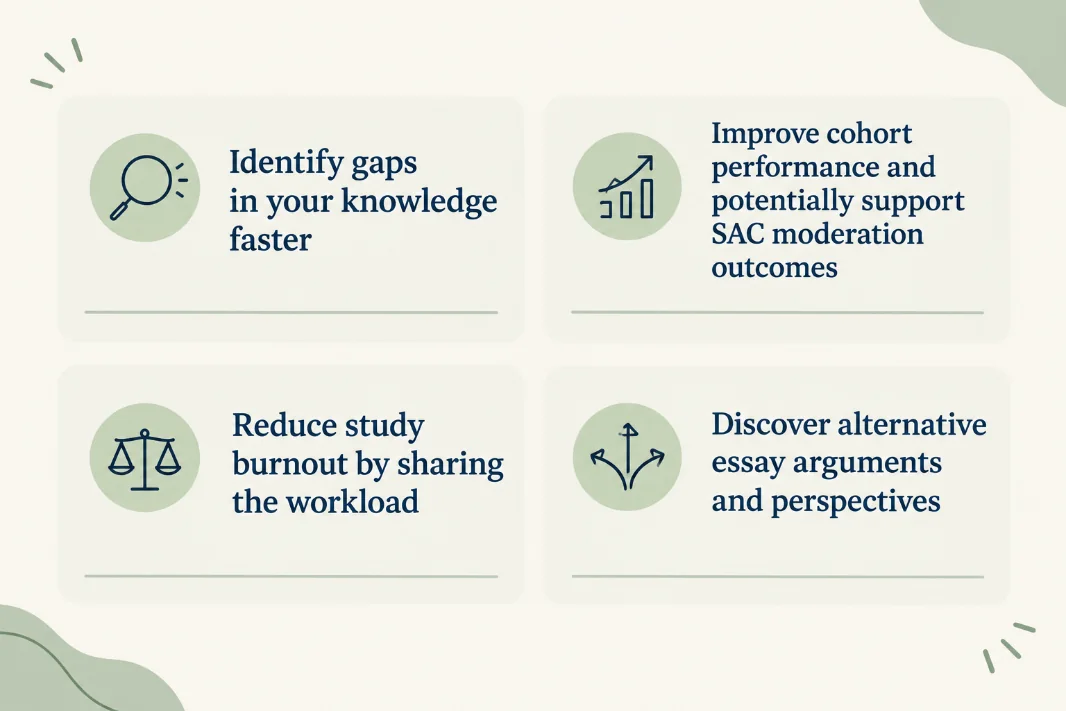
When you explain a complex concept to someone else, you test your own comprehension. You find gaps in your knowledge fast. If you try to explain a VCE Biology signal transduction pathway to a friend and stumble on step two, you just found a weak point in your revision.
Teaching forces active recall. Reading through your handwritten notes feels productive, but it is passive. Answering a classmate's frantic message about physical chemistry at nine o'clock at night forces your brain to retrieve and structure information clearly.
How classconnect Simplifies Private Collaboration
Setting up endless group chats and disorganized drives gets messy quickly. That is where our platform classconnect comes in to keep your revision streamlined and secure.
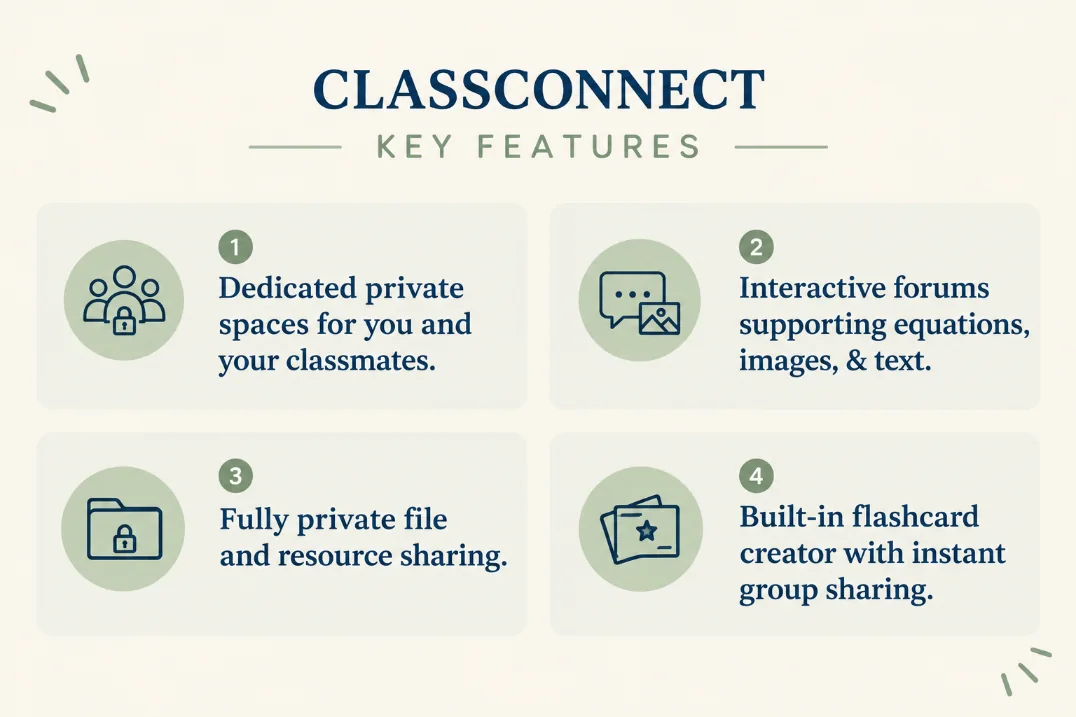
On classconnect, you can create dedicated online classes directly with your teammates. Inside each class, you get access to interactive forums designed specifically for VCE subjects. You can type out basic text questions, upload helpful diagram images, or use formatted math and science equations when working through tricky Specialist or Methods problems.
classconnect allows you to resource share everything you own completely privately. You never have to worry about your hard work leaking outside your group. Everything stays protected within your class space.
Additionally, you can create digital flashcards directly on classconnect. Once built, you can share these flashcard sets privately within your class to help your peers memorize key definitions, quotes, and formulas. It speeds up the revision process for everyone involved.
How to Build an Effective Resource Sharing System
You do not need to dump your entire personal folder onto the public web. You just need a structured setup with a small study group or your subject classmates using classconnect.
1. Build a Shared Space for Practice Papers
VCAA releases past papers, but independent companies sell practice exams that offer fresh questions. Buying every company paper gets expensive quickly.
Set up a private class on classconnect for your cohort. Divide the cost of commercial trial exams or swap practice papers you have completed. Uploading these resources into your shared space gives you far more exposure to tricky question styles than grinding through the same official past papers twice.
2. Swap Essays for Blind Feedback
When you write five essays on the same text, you become blind to your own mistakes. You miss structural flaws, awkward phrasing, and weak thesis statements.
Post your essay in your classconnect class forum. Have a classmate read it over and leave feedback in the replies. Marking someone else's work against the official VCAA criteria teaches you what examiners look for when grading fast. Receiving feedback shows you where your arguments fall flat.
3. Divide and Conquer High Volume Subjects
Subjects like Health and Human Development, Legal Studies, and Psychology demand massive amounts of rote learning and case study analysis.
Split up the workload. Assign one person to build classconnect flashcard decks for Unit 3 Topic 1 and another person to handle Unit 3 Topic 2. Sharing these custom decks privately within your platform class saves dozens of hours of manual typing while keeping everyone focused on accurate, high quality material.
Overcoming the Competition Mindset
It feels weird to hand over your best summary notes to someone you spent eight months competing against. You spent the year watching SAC results posted on the wall, tracking who scored higher on every test.
Forget the school term. The SAC competition is over. The real challenge is the statewide exam.
Every mark your classmate gains on the final exam works like leverage for your own score. When you share a strong practice response, post a complex equation to your forum, or distribute your flashcard deck, you are not giving away your rank. You are protecting your SAC marks from dragging down during VCAA moderation.
Log onto classconnect tonight and set up a class for your study group. Send your teammates your best formula sheet, drop a practice question in the forum, and share your fresh flashcard decks. When you elevate your cohort, your own ATAR goes up with it.